Copenhagen Airport buys SAF for its own business travel
SAF supplied to aircraft at Copenhagen Airport will compensate for the CO₂ emissions from the company’s business travel.
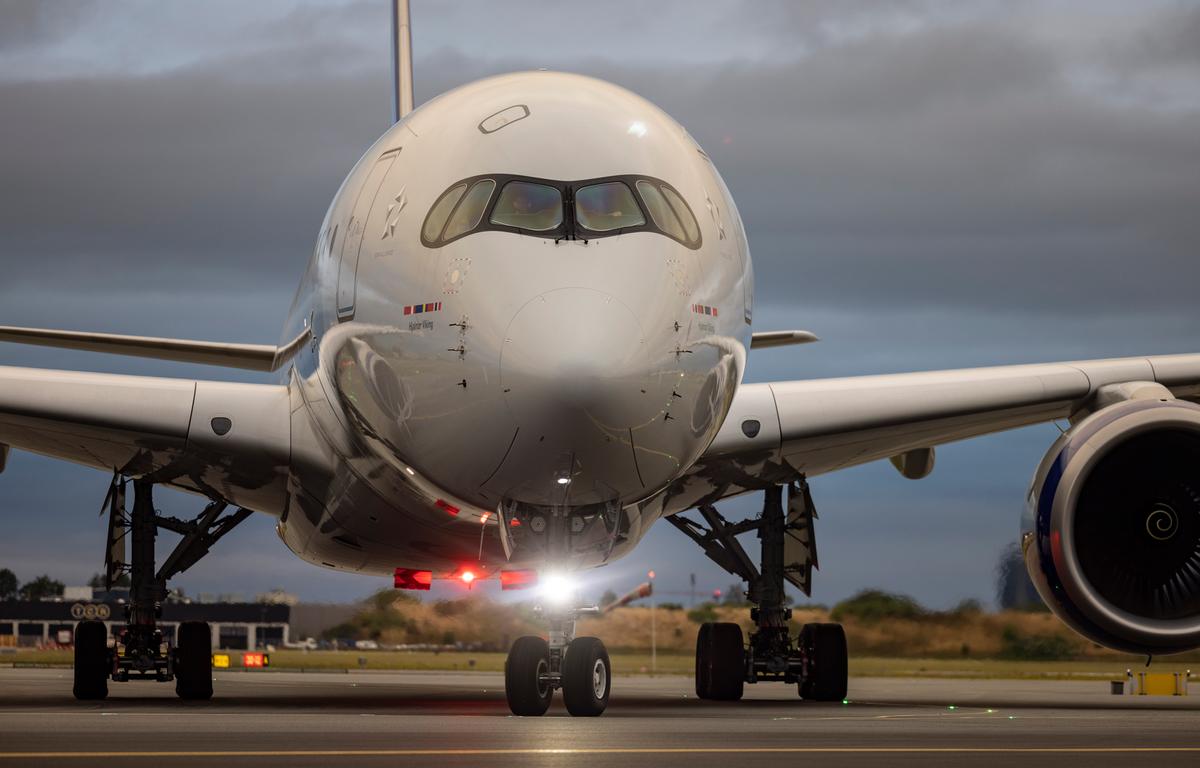
When employees of Copenhagen Airports A/S travel by air on business, their journeys now come with a significantly lower CO₂ footprint.
Going forward, the CO₂ emissions from business travel will be compensated by purchasing SAF (Sustainable Aviation Fuel) for aircraft fuelling at Copenhagen Airport.
This is made possible through an agreement with DCC & Shell Aviation Denmark.
More than 80 tonnes of SAF in 2025
The initiative is already underway. Shortly before the New Year, almost 300 tonnes of CO₂ from last year’s business travel were compensated through the purchase of just over 80 tonnes of SAF produced from agricultural waste products.
“As an airport working to promote alternative fuels, it is natural to use them in our own operations when travelling abroad,” says Maria Skotte, Chief Sustainability Officer at Copenhagen Airport.
“I am delighted that all our business travel is now compensated with SAF – and particularly that the fuel is delivered directly here at the airport."
Strengthening Nordic demand
SAF is delivered into the airport’s main fuel supply from the Prøvestenen facility and reaches all aircraft fuelling at Copenhagen Airport.
This distinguishes the agreement from other types of CO₂ compensation.
“It is important that the fuel is delivered locally, as this helps increase demand in the Nordic region. A regional and robust supply of alternative energy sources is crucial for the green transition of aviation,” says Maria Skotte.
Offering support to other companies
The CO₂ footprint of SAF is between 65 and more than 90 per cent lower than that of conventional jet fuel, depending on the feedstock.
Trials carried out at Copenhagen Airport as part of the EU‑funded Alight project have also shown that the use of SAF can reduce emissions of ultrafine particles from aircraft.
“Our own purchase is too small to have any direct impact on local air quality. But the more companies that take similar steps, the greater the effect. We are happy to support other businesses wishing to compensate their travel using SAF in Copenhagen,” says Maria Skotte.
Facts
-
SAF (Sustainable Aviation Fuel) is produced from biological waste materials.
-
The CO₂ footprint of SAF can be 65 to more than 90 per cent lower than that of conventional jet fuel, depending on the feedstock.
-
Since 2025, the EU has required that at least two per cent SAF be included in the total fuel supply to airports in the EU. Copenhagen Airport’s SAF purchases are in addition to this mandatory share.
-
The EU requirement will gradually increase to 6 per cent in 2030 and 70 per cent in 2050.
-
Employees at Copenhagen Airport make more than 1,000 business trips by air each year, more than 75 per cent of them within Europe.